What Stress Actually Does to the Way You Think
Read Time: 6 minutes
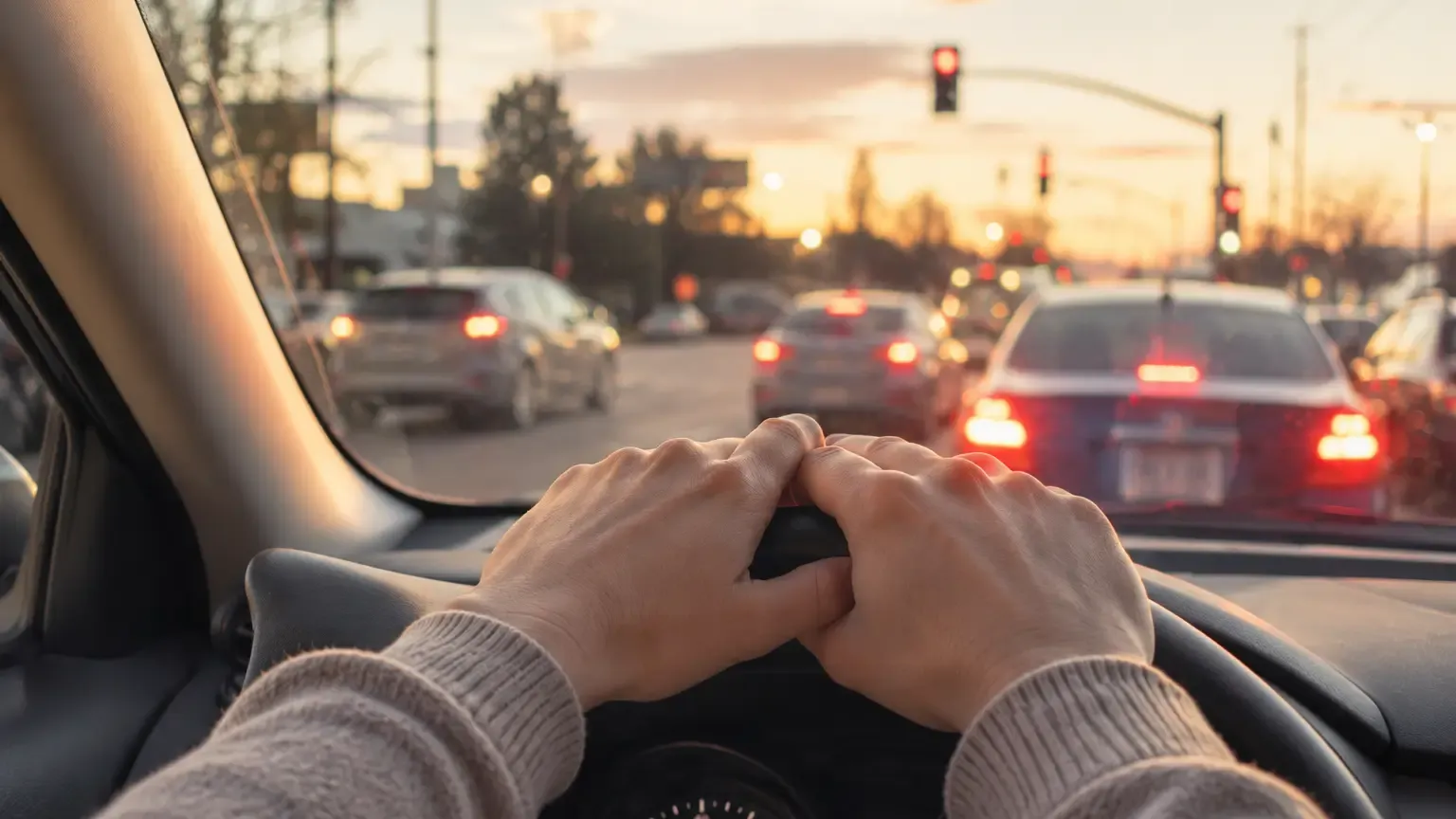
You are eleven minutes behind before the day has decided what it wants from you. Your phone, which holds the address you never memorized, blinks once and goes dark in your hand. The light ahead turns yellow and then red, and as you ease onto the brake a car slides into the gap in front of you without a signal, close enough that your foot presses harder than the moment requires. None of this is catastrophic. All of it accumulates. By the time you walk through your own front door, a small and ordinary question, something about dinner or a bag left in the hallway, lands like an accusation, and you hear yourself answer someone you love in a tone you would never choose on a calmer afternoon.
Most of us have lived some version of that afternoon. What lingers afterward is rarely the traffic. It is the strange sense that you were not entirely yourself, that the sharpness came from somewhere you did not authorize, and that the person you snapped at deserved the version of you that was still stuck three intersections back.
Stress does not only change how you feel. It changes what you can think.
We tend to talk about stress as a feeling, a kind of internal weather that makes an ordinary day harder to move through. The feeling is real, but it sits on top of something more mechanical. Under stress, the brain changes which of its systems are running the show, and that shift quietly narrows the range of thoughts available to you.
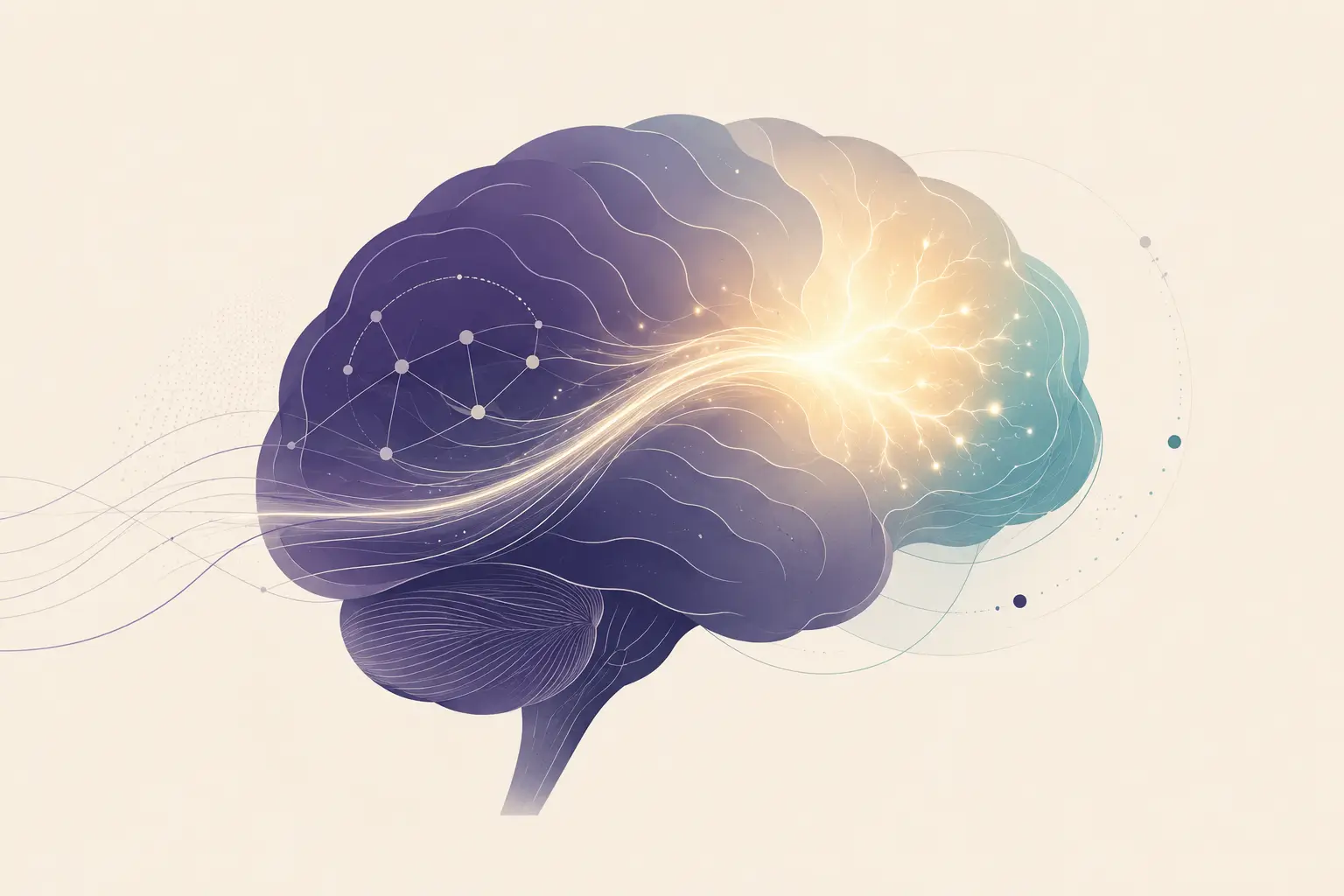
In calmer conditions, a network of regions anchored in the prefrontal cortex does the slow, expensive work we think of as being reasonable: holding several considerations at once, weighing consequences, taking another person’s view, choosing a response rather than discharging an impulse. Amy Arnsten, who studies how stress acts on this part of the brain, has shown that even mild and uncontrollable stress floods the prefrontal cortex with signaling chemicals that rapidly weaken its function. The region that lets you pause and consider is, in effect, taken partly offline at the precise moment you would most like to use it.
Meanwhile a different system steps forward. Work by Erno Hermans and colleagues describes how an acute stressor prompts a large-scale reconfiguration of brain networks, shifting resources toward a salience network tuned for threat detection and rapid response, and away from the executive network that supports reflection and flexible attention. Perception narrows to match. You register the car, the delay, the obstacle, and stop registering much else, which is less a lapse in attention than attention doing precisely what a threatened brain is asking of it.
Your brain is spending a budget, and stress changes the math
It helps to think of the brain less as a thinking machine and more as the manager of a finite energy budget. Lisa Feldman Barrett and colleagues describe the brain as constantly predicting what the body is about to need and allocating resources in advance, a process sometimes called allostasis. Every system the brain runs costs something, and the slow, deliberative work of the prefrontal cortex is among the most expensive things it does.
When the brain reads a situation as threatening, even when the threat is social rather than physical, it does what any manager does with a tight budget under pressure. It funds what looks urgent and defunds what looks optional. Speed and vigilance get the money. Patience and the benefit of the doubt do not. Seen this way, snapping at someone you love is less a moral lapse than the downstream result of an allocation you never consciously made: your brain spent its resources on getting through the next ninety seconds, and had little left over for the longer view.
You are not choosing to be reactive
This is the part worth sitting with. In the moment you raise your voice, it can feel like a decision, or at least like a failure of one. The neurobiology suggests something more humbling and more useful. The capacities you would need in order to choose differently, the perspective-taking and the pause, are the very capacities that stress has temporarily turned down. You are not selecting reactivity from a menu of options; you are operating with a narrowed set of them, because the system that generates the wider set is running on reduced power.
It would be easy to hear this as an excuse, a tidy piece of biology to stand behind the next time you are short with someone. That is not what it offers. An account of how something happens is not permission to keep letting it happen. What the science gives you is closer to a map. If you know that perception narrows under stress, and that the deliberative parts of the brain go quiet, you can begin to recognize the state while you are still inside it. Recognition is a small thing, but it is the first move actually available to you, and most of what follows depends on it.
Regulation is a skill, not a personality trait
We often describe regulation as though it were a fixed feature of character: some people are simply calm, others are simply reactive, and that is the end of it. The research points somewhere more hopeful. Stephen Porges uses the term neuroception for the brain’s continuous, below-awareness reading of whether a situation is safe or dangerous. That reading is not fixed. It responds to cues, and many of those cues can be practiced and supplied on purpose.
The parasympathetic nervous system, which supports the settled, socially engaged state in which the thinking brain comes back online, can be invited rather than waited for. A slow exhale that runs longer than the inhale, the steadying effect of a familiar voice, a few seconds spent naming what you are feeling instead of acting on it: these are not soft consolations. They are inputs that move the budget back toward the systems you want running when you reach the front door.

None of this means the goal is to feel nothing. The next time the phone dies and the light turns red, the heat of it will still rise, because that response is older and faster than any technique. What changes with practice is the distance between the rise and the reaction, and what you can do inside it. You learn to notice the narrowing as it happens, to recognize that the version of you currently behind the wheel is working with less than its full range, and to give your brain one practiced cue that widens the view again before you arrive home to the people who were never the problem in the first place.
Frequently asked questions
Why do I snap at people when I’m stressed?
Under stress, the brain shifts resources away from the prefrontal cortex, the region that handles patience, perspective, and impulse control, and toward systems built for speed and threat detection. The reaction is the product of a brain state rather than a considered choice, which is part of why it can feel as though it came from outside you.
Can stress actually impair how well you think?
Yes, and the effect can be fast. Research on the prefrontal cortex shows that even mild, uncontrollable stress can quickly reduce access to complex reasoning, working memory, and flexible problem-solving. The impairment is usually temporary and lifts as the stress response settles.
Is emotional regulation something you can learn?
Yes. Regulation is better understood as a trainable skill than a fixed trait. Cues that signal safety to the body, such as a slower exhale or the steadying presence of another person, can shift you toward the state in which clearer thinking returns. With repetition, noticing and interrupting the stress response becomes more reliable.