Why Your Best Thinking Happens in the Shower

The shower is not doing anything. The conditions are.
Read Time: 6 minutes
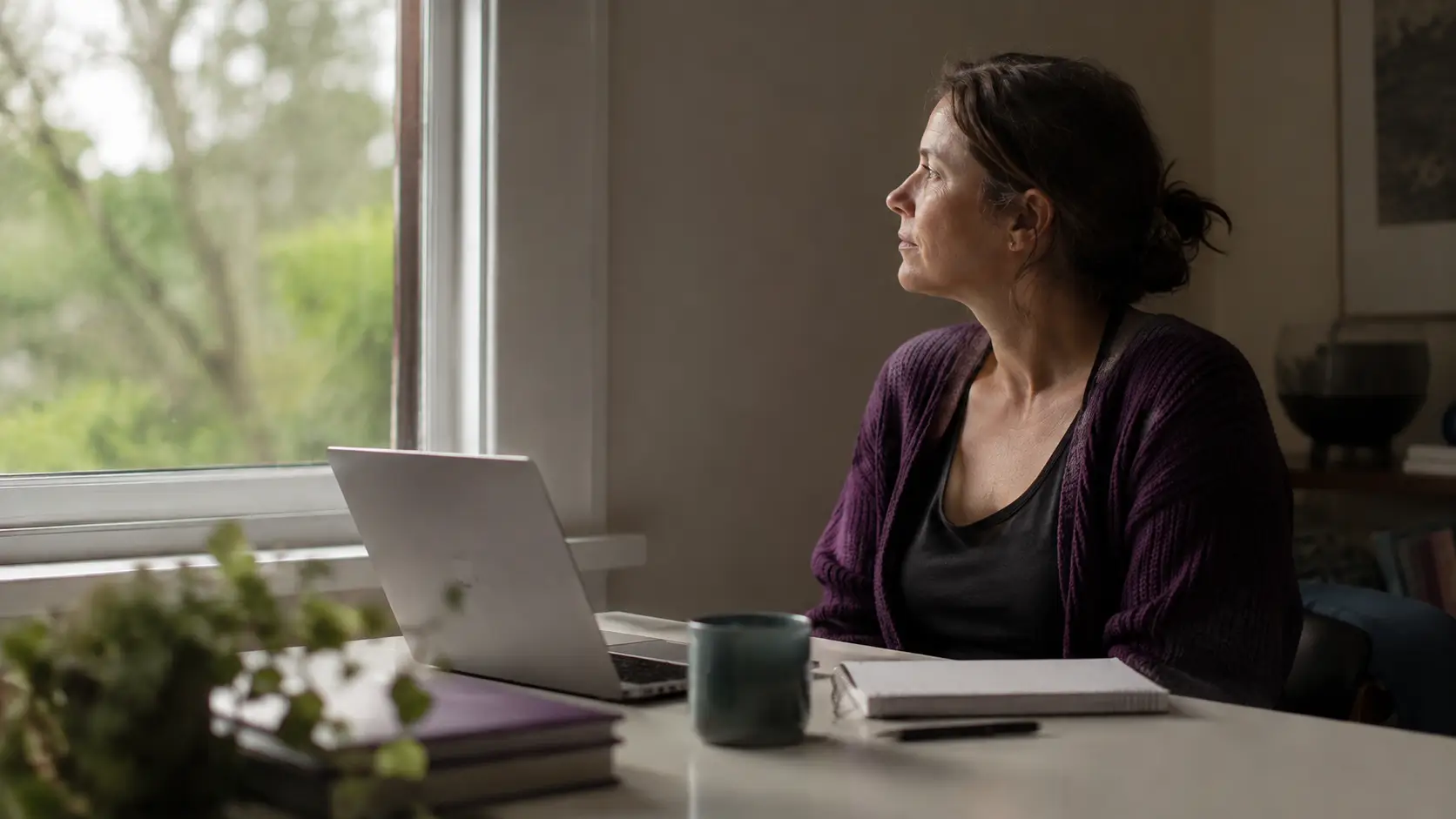
You had been at the problem for three days. You made a document about it, then a second document, then a list of the reasons the first document was wrong. Nothing moved. Then on Thursday morning, you were standing in the shower thinking about nothing in particular, roughly halfway through the ordinary hair washing sequence, and the answer arrived intact, as though it had been waiting for you in the bathroom.
Nearly everyone has a version of this, and the specific location varies more than the story suggests. For some people, it is the shower. For others, it is a walk, a drive on a familiar route, the fifteen minutes before sleep, or the middle of washing up. What these have in common is not water. It is a particular set of conditions that matter a great deal, and most working days are structured to prevent them.
The shower is not the mechanism
While the internet has spent a decade insisting otherwise, no meaningful body of research shows that showers specifically produce insight. The frequently cited figures about how many people have their best ideas in the shower come from consumer surveys rather than experiments, and they establish only that people notice it happening there. They don't establish why.
The actual research is about something less charming and considerably more useful, which is what the brain does when you stop directing it, and what that has to do with solving a problem you have already stopped consciously working on.
What runs when you are not running anything
For most of the twentieth century, the resting brain was assumed to be fairly quiet. That turned out to be wrong. Marcus Raichle’s work established the existence of a default mode network, a set of regions that becomes more active when attention is not directed at an external task and quieter when it is. The brain is not idling between tasks. It is running a different operation, one associated with autobiographical memory, imagining future situations, and constructing scenarios that are not present.
Kalina Christoff and colleagues connected this directly to mind wandering. Using experience sampling inside a scanner, they found that periods when attention drifted away from the task recruited both default mode and executive regions, and notably that this recruitment was strongest when participants had not yet noticed they were wandering. Whatever is happening in those intervals, it is not a low-effort state. It is substantial processing that happens to be pointed somewhere other than where you thought you were pointing it.
Roger Beaty and colleagues have since described creative thought as depending on the interaction between the default mode network and executive control systems, rather than on either one alone. The brain’s generation of unusual associations appears to draw on the default network, whereas evaluating and refining them draws on control regions. This is a useful correction to the popular version of the story, which tends to imply that the solution is simply to stop concentrating. The evidence suggests the productive state involves both systems, and the trick is the sequencing.
What incubation research actually shows
The literature gives the phenomenon a name. Incubation refers to a period in which we set a problem aside before returning to it, while the incubation effect describes the improvement in problem solving that can occur after that break. A meta-analysis by Ut Na Sio and Thomas Ormerod found a reliable overall incubation effect across studies, with the greatest benefits appearing in divergent thinking tasks- problems that invite multiple possible ideas or solutions - rather than linguistic or visual insight problems.
The important detail in that analysis is what people did during the break. Incubation periods filled with a low-demand task tended to outperform periods filled with a high-demand task, and also outperformed doing nothing at all. Complete rest is not optimal. A mildly occupying activity that leaves most of the machinery free appears to be optimal.
Benjamin Baird and colleagues tested this directly, giving participants an unusual-uses task, then an incubation interval spent on either a demanding task, an undemanding one, rest, or no break. Only the undemanding condition improved performance on the problems participants had already seen, and it did not improve performance on new problems. The benefit was specific to material already loaded and left unresolved.
Which describes a shower almost exactly. It is an undemanding task. It occupies enough attention to prevent deliberate problem-solving and not enough to require anything. It is one of the last remaining intervals in an ordinary day that a phone cannot fill.
The condition nobody protects
This is where the practical implication lies, and it is slightly uncomfortable. The default mode network has more room to do its work when attention is not continuously occupied by external demands. Yet unoccupied attention has become genuinely rare. We tend to think of productivity as something that requires sustained attention, but some of our most productive thinking time happens when attention is allowed to wander.
Nearly every interval that used to be undemanding is now available for input: the queue, the walk between buildings, the four minutes before a meeting begins, the moments after waking. These were natural opportunities for incubation. Small stretches of time when attention could loosen and the mind could wander. We thought we were doing nothing. But our brains were not.
Lisa Feldman Barrett’s framing of the brain as an organ managing a body budget adds another layer. Sustained directed attention is metabolically expensive, and a day constructed entirely from directed attention, with every gap filled, does not permit the recovery intervals the budget assumes. The cost of never having an undemanding moment is not only the lost insight. It is the accumulated absence of any point at which the accounting settles.
The honest caveat
It would be convenient to conclude that mind wandering is straightforwardly good. But that’s not the case. Matthew Killingsworth and Daniel Gilbert’s large experience-sampling study found that people reported being less happy when their minds were wandering than when they were engaged with what they were doing, across nearly every activity, and that this relationship was not simply explained by the unpleasantness of the activity at hand. Jonathan Smallwood and Jonathan Schooler’s review of the field similarly describes a more nuanced picture: mind wandering can hurt performance when we need to stay focused on what we’re doing, but it can also be useful when we’re thinking through problems, planning for the future, or generating new ideas.
So the claim is narrower than the popular version. Undirected attention is valuable for a specific job and for solving problems you have already cognitively loaded. It is not a general prescription for how to spend a day. Wandering while driving is a hazard. Wandering while reading means reading it again. The distinction is what mind wandering steals attention from.
Using it deliberately
Load the problem first
Baird’s finding was specific: the benefit appeared on problems participants had already encountered, not on new ones. Incubation is not a substitute for effortful work; it is what the effortful work becomes available for. Spend real time on the problem, then leave it while it is still unresolved, but before you’ve given up.
Choose a genuinely undemanding interval
Walking is the best studied option. Marily Oppezzo and Daniel Schwartz found that walking increased performance on divergent thinking tasks substantially compared with sitting, both outdoors and on a treadmill facing a blank wall. This suggests the effect is not principally about the scenery. The criterion is that the activity occupies your hands or your feet and leaves your attention mostly unallocated. A podcast does not qualify.
Let sleep do the part you cannot
Robert Stickgold and Matthew Walker’s work on sleep-dependent memory processing describes sleep as performing an active triage: selecting which recent material to consolidate and integrating it with what is already stored, including forming associations that were not present when the material was encoded. Some of the overnight resolution people report is this. The instruction that follows is unglamorous and correct, which is to work on the problem in the evening and then to sleep rather than continue.
Have somewhere to put it
If you are going to create more room for mind wandering, have a way to capture what surfaces. Ideas that arrive while walking, showering, driving, or staring out a window can disappear surprisingly quickly, especially because you weren’t trying to commit them to memory in the first place. Use whatever capture method works for you. A notebook, a voice memo, or a note on your phone. Keep it close enough that recording the thought doesn’t require leaving the moment entirely.
What this changes
The useful reframe is not necessarily that you should take more showers or schedule time to stare out the window. It is that the daily schedule intervals we have been treating as gaps may be part of how problem-solving and creative thinking get done. When every spare moment is filled with a podcast, a scroll, an email, or another task, we aren't just filling time. We are changing the conditions under which our minds can wander, make associations, and return to problems from somewhere new.
So when you have been working on a problem for three days, and the answer still will not come, more focused effort may not be what is missing. It may be worth asking a different question: "When was the last time you gave your mind somewhere to go without telling it where to go?"