The Hour After a Hard Conversation, Explained

The conversation is over. Your physiology has not been told.
The meeting ends at eleven. Someone says something about circling back, the call drops, and you are sitting in a room that is suddenly very quiet. Technically, nothing is happening now. You have a task list open, a lunch you are supposed to eat, and a message from someone about an unrelated thing, and none of it is reachable, because you are already back at minute nine, running the exchange again to see whether you should have said it differently.
Most advice about difficult conversations stops at the door. There is a great deal written about how to prepare for one, how to open it, how to hold your position inside it. There is almost nothing about the hour afterward, which is strange, because the hour afterward is where most of the damage gets done: to your afternoon, to your judgment, and sometimes to the relationship itself, when you send the follow-up message that you will want back by three.
That hour is not wasted time. It is a physiological event with a fairly predictable shape, and once you understand what the shape is, there are specific things you can do with it that work considerably better than either pushing through or picking it apart.
The conversation ended, and your body was not informed
A hard conversation is a social threat, and the brain evaluates social threat quickly and bodily, well before you have consciously decided what the conversation meant. Stephen Porges describes this as neuroception: a continuous, non-conscious appraisal of safety and danger that runs off cues like tone, pace, facial movement, and the length of a pause. It is not thinking about the conversation. It is faster than that, and it has already produced a physiological state by the time you are able to form a sentence about what just happened. It is the same appraisal that, in a team, reads the leader before it reads the agenda.
The relevant point is that the state does not switch off when the call does. Naomi Eisenberger's work on social rejection found that social disconnection recruits neural systems that overlap with those involved in physical pain, which is part of why being criticized by a colleague can produce a sensation that is genuinely bodily rather than merely metaphorical. And Amy Arnsten's research on stress and the prefrontal cortex describes what follows: under sufficient catecholamine release, prefrontal function is suppressed while more reflexive circuitry takes over. The part of you that weighs nuance and considers alternatives is, for a period, running at reduced capacity.
This is worth mulling over, because it explains something that otherwise looks like a character flaw. In the hour after a hard conversation, you are frequently at your least capable of evaluating the hard conversation. You feel an urgent need to resolve it, and the machinery you would use to resolve it well is temporarily the machinery that is offline.
What the replaying is actually doing
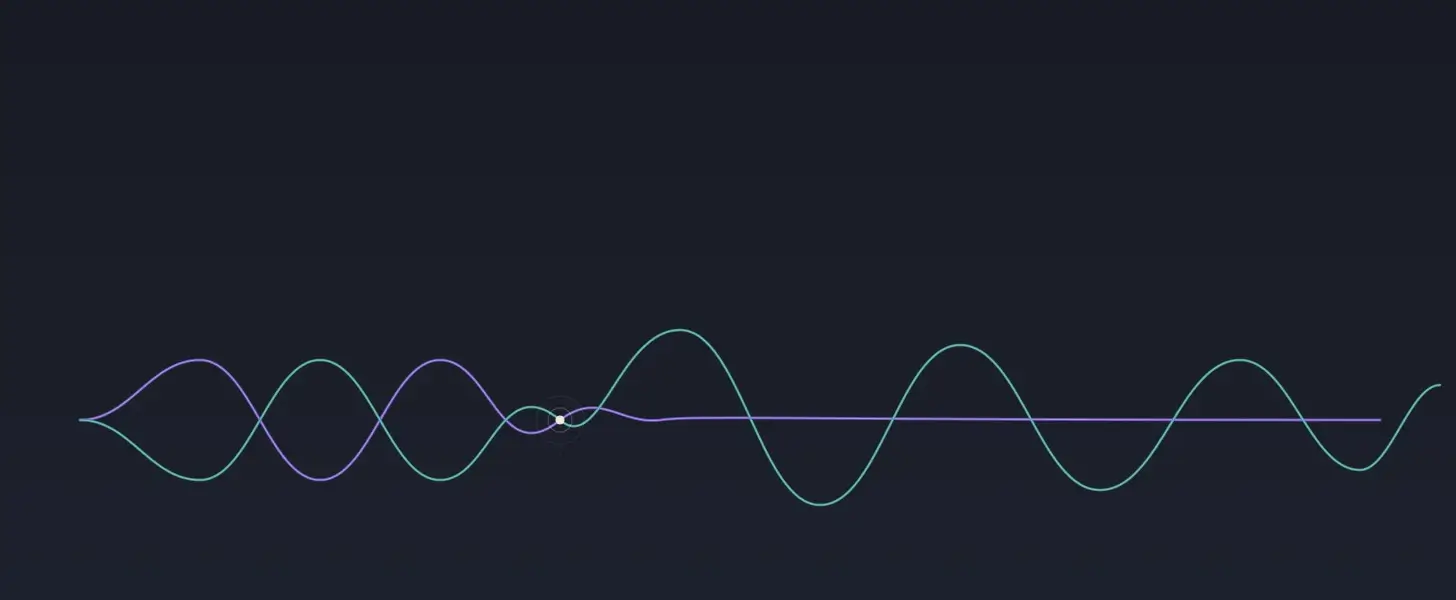
The obvious thing to do with an unresolved exchange is to go back over it, and almost everyone does. The problem is that going back over it is not neutral. Jos Brosschot and colleagues proposed the perseverative cognition hypothesis, which makes a simple and consequential argument: a stressor lasts minutes, but worry and rumination about it can sustain the physiological response for hours or days. The body does not distinguish sharply between the event and the representation of the event. Replaying the conversation is, in physiological terms, close to having it again.
The measurable version of this is fairly well documented. A review by Peggy Zoccola and Sally Dickerson found that rumination is associated with prolonged cortisol responses and slower recovery after a stressor, with the strongest effects when the rumination is about the stressful event itself. The recovery curve that should be sloping down stays flat, and it stays flat for as long as you keep the event live.
Lisa Feldman Barrett's framing gives this a useful cost accounting. Barrett describes the brain as a predictive organ managing a body budget, continuously allocating metabolic resources on the basis of what it expects to need. An unresolved social threat is an open prediction, and open predictions are expensive to hold. This is why an hour of replaying leaves you more tired than an hour of work, and why the tiredness is real rather than imagined. You spent something.
Bruce McEwen's account of allostatic load extends the point across time. It is not one difficult conversation that accumulates. It is the pattern of difficult conversations that are never physiologically closed out, each one leaving a small unpaid balance, over a period of years. It is the same arithmetic that makes a reorganization exhaust a team long after the org chart has settled.
Why the two obvious strategies both fail
There are two things people reliably do with this hour, and neither works particularly well.
The first is to push through. You open the next task, you tell yourself it was fine, and you decline to think about it. This can look like admirable composure, and it sometimes is, but suppression is effortful, and the effort competes with the work you are trying to return to. More to the point, suppressing the thought does not close the prediction. It just stops you from looking at it while it stays open.
The second is to process it, which usually means talking it through with someone, at length, more than once. This is better, but it has a threshold. A single conversation with a trusted person can genuinely help you make sense of what happened. Four conversations with four people, each one rehearsing the same grievance, is co-rumination, and it tends to intensify the state rather than resolve it. The difference is whether the retelling is moving toward an interpretation or circling the same one.
What the research points toward is a third option, which is neither avoidance nor rehearsal, and which is mostly about changing the conditions rather than changing your mind.
Four things worth doing with the hour
First
Move, before you think
Physical movement is the least intellectually satisfying item on this list and probably the most reliable. It gives the physiological arousal somewhere to go, and it occupies attention at a low enough level that the replaying loop loses its grip. Gregory Bratman and colleagues found that a ninety-minute walk in a natural setting reduced both self-reported rumination and activity in a brain region associated with it, while an equivalent walk beside a busy road did not. Ninety minutes is more than most people have. Fifteen outside is not nothing, and it is available immediately.
Second
Change where you are standing
Ethan Kross and Ozlem Ayduk have studied what they call self-distanced reflection: revisiting a difficult experience from an observer's vantage point rather than from inside your own eyes. Their finding is that the distanced version produces less emotional reactivity and more actual understanding, whereas the immersed version tends to reconstruct the feeling without adding anything to it. Practically, this means the question is not what did they mean by that. It is what was happening in that room, described as though you were a third person watching it. The shift sounds small and it changes the output noticeably.
Third
Write it down once
James Pennebaker's expressive writing research is among the more replicated findings in this area: writing about an emotionally significant experience, for a short period, is associated with measurable improvements in wellbeing and health markers. The mechanism is thought to involve organizing an experience into a coherent account rather than leaving it as an unstructured set of impressions.
The operative word is once. Fifteen minutes, unedited, not intended for anyone. The value is in the construction of the account, and it disappears if the writing becomes a place to rehearse the grievance daily.
Fourth
Do not decide anything yet
Given what Arnsten's work describes about prefrontal suppression, the hour after a hard conversation is a poor hour in which to determine what the conversation means, whether the relationship is salvageable, or what you are going to say next. Draft the message if you need to draft it. Do not send it. Almost everything in that hour that feels urgent is not, and the thing that makes it feel urgent is precisely the state you would want to have passed before you act.
What the hour is for
The reframe to remember is that this hour is not the aftermath of the conversation. It is part of it. The exchange is not finished when the talking stops; it is finished when the physiology has completed its arc, and that takes considerably longer than the meeting did, and it does not happen on its own if you keep feeding it.
That also changes what you might reasonably expect of yourself. Not to be unaffected, which is neither possible nor especially desirable, but to give the thing a defined ending rather than letting it run in the background until it eventually goes quiet on its own.
It is eleven o'clock. There is an hour ahead of you that has already been claimed. The question is only whether you spend it running the exchange again, or spend it closing it.
Frequently asked questions
- Why can I not stop replaying a conversation that is already over?
- Because the brain does not treat the memory of a social threat very differently from the event itself. Research on perseverative cognition has found that worry and rumination sustain the physiological stress response long after the situation that triggered it has ended, which means replaying an exchange keeps the body in the state the exchange produced. It is not a failure of discipline. It is the mechanism working as designed, on material that no longer requires it.
- How long does it take to settle after a difficult conversation?
- There is no fixed number, and it depends heavily on what you do in the interval. Left alone and not rehearsed, the acute physiological response typically resolves over a period of roughly twenty to sixty minutes. Sustained rumination can extend it considerably, with studies finding prolonged cortisol elevation in people who continue to dwell on a stressor. Movement, writing the experience down once, and deliberately delaying any decision all tend to shorten it.
- Is it better to talk it through with someone or to leave it alone?
- One conversation with a person you trust is generally useful, particularly if it helps you arrive at an interpretation you did not have before. Repeating the same account to several people, without the interpretation shifting, tends to intensify the state rather than resolve it. The practical test is whether the retelling is going somewhere. If the fourth telling sounds like the first, it is rehearsal rather than resolution.
References
- Arnsten, A. F. T. (2009). Stress signalling pathways that impair prefrontal cortex structure and function. Nature Reviews Neuroscience, 10(6), 410-422. https://doi.org/10.1038/nrn2648
- Barrett, L. F., & Simmons, W. K. (2015). Interoceptive predictions in the brain. Nature Reviews Neuroscience, 16(7), 419-429. https://doi.org/10.1038/nrn3950
- Bratman, G. N., Hamilton, J. P., Hahn, K. S., Daily, G. C., & Gross, J. J. (2015). Nature experience reduces rumination and subgenual prefrontal cortex activation. Proceedings of the National Academy of Sciences, 112(28), 8567-8572. https://doi.org/10.1073/pnas.1510459112
- Brosschot, J. F., Gerin, W., & Thayer, J. F. (2006). The perseverative cognition hypothesis: A review of worry, prolonged stress-related physiological activation, and health. Journal of Psychosomatic Research, 60(2), 113-124. https://doi.org/10.1016/j.jpsychores.2005.06.074
- Eisenberger, N. I. (2012). The pain of social disconnection: Examining the shared neural underpinnings of physical and social pain. Nature Reviews Neuroscience, 13(6), 421-434. https://doi.org/10.1038/nrn3231
- Kross, E., & Ayduk, O. (2011). Making meaning out of negative experiences by self-distancing. Current Directions in Psychological Science, 20(3), 187-191. https://doi.org/10.1177/0963721411408883
- McEwen, B. S. (1998). Stress, adaptation, and disease: Allostasis and allostatic load. Annals of the New York Academy of Sciences, 840(1), 33-44. https://doi.org/10.1111/j.1749-6632.1998.tb09546.x
- Pennebaker, J. W. (1997). Writing about emotional experiences as a therapeutic process. Psychological Science, 8(3), 162-166. https://doi.org/10.1111/j.1467-9280.1997.tb00403.x
- Porges, S. W. (2007). The polyvagal perspective. Biological Psychology, 74(2), 116-143. https://doi.org/10.1016/j.biopsycho.2006.06.009
- Zoccola, P. M., & Dickerson, S. S. (2012). Assessing the relationship between rumination and cortisol: A review. Journal of Psychosomatic Research, 73(1), 1-9. https://doi.org/10.1016/j.jpsychores.2012.03.007